
One humid morning in August, I stared at a pivot table that made absolutely no sense and realized I was trying to solve a multi-variable equation with corrupted data. It was the kind of analytical failure that would have gotten me laughed out of a corporate audit ten years ago. I had 14 tabs open in my 'Cognitive Audit' workbook, and for the life of me, I couldn't tell if my improved focus was coming from the morning capsule, the midday tincture, or the extra hour of sleep I’d managed to snag the night before. I was an accountant who had lost control of his own ledger.
Before we go any further into the weeds of my data, a quick disclaimer: I am not a doctor, a neuroscientist, or a health professional of any kind. I’m a 55-year-old retired accountant who spent 30 years making other people’s numbers add up and now spends his retirement trying to fix his own brain. This site uses affiliate links. If you buy something through these links, I earn a commission at no extra cost to you. I only recommend brain supplements I have personally tested and tracked in my own spreadsheet. Please talk to your own doctor before starting any new regimen—especially if your memory is starting to feel like a corrupted file, like mine was.
The Multi-Variable Trap: Auditing the 'Stack'
Back in mid-February, I decided that if one supplement was good, four must be better. It’s the old 'diversified portfolio' logic. I started what the internet calls a 'stack'—a combination of different nootropics designed to hit the brain from different angles. Every morning, the kitchen sounded like a small percussion ensemble. There was the hollow, plastic rattle of four different supplement bottles hitting the kitchen granite at the same time, a sound that became the opening bell for my daily performance audit.
I was swallowing these things like they were the key to a tax-free retirement. One of them was a premium capsule called NeuroPrime, which I added to my sheet because it seemed like the high-end blue-chip stock of the supplement world. I felt like a chemist, or at least a very motivated pharmacist. But as any junior auditor can tell you, the more entries you put into a system, the higher the margin for error. By late spring, I wasn't just tracking results; I was managing a logistical nightmare.

The Data Fog and the Hum in My Teeth
By the time I hit six weeks of tracking this complex stack, I entered what I call the Data Fog. In accounting, if you have a discrepancy in a balance sheet, you look for the specific transaction that caused it. But when you’re taking four different pills, you’ve effectively co-mingled your funds. I started noticing a low-grade electrical hum in my teeth that made me wonder if I was over-caffeinated or just over-supplemented. It wasn't painful—just a weird, buzzing vibration that made it hard to tell if the supplements were working or if my nervous system was just filing a formal protest.
My wife, who has been incredibly patient with my new hobby, finally reached her limit when she saw me hunched over the laptop at 11:00 PM. She looked at the 14 tabs on my 'Cognitive Audit' spreadsheet and asked if I was planning to file a tax return for my neurons. She had a point. I was spending three hours building a pivot table for 'mental clarity' only to realize I had forgotten to log any data for the previous Tuesday. The irony of spending that much brainpower to track brainpower was not lost on me. I was working with a spreadsheet that could technically handle the standard Excel row limit of 1,048,576 entries, but my own mental capacity was topping out at about ten.
I realized I was failing at the most basic rule of testing: isolation of variables. If the 'mental clarity' score went up, was it the NeuroPrime? Was it the budget option I’d rotated in? Or was it just a particularly good cup of coffee? I couldn't prove the ROI on any single item. I was just throwing money at a wall and hoping some of it stuck like a well-amortized asset.
The Reset: Finding the Single Signal
One humid morning in August, after staring at that nonsensical pivot table, I decided to conduct a total audit. I cleared the deck. I stopped the pills, stopped the tinctures, and went back to a zero-based budget. I needed to find a single, clean signal. I moved away from the traditional capsule—even though I’d become an expert at identifying the Size 00 capsule length of 23.3 mm just by sight—and tried something completely different.
I started testing an audio-based approach called The Brain Song. It was a radical departure from my previous 'stacking' philosophy. Instead of adding more physical inputs to the system, it used sound frequencies. It felt like switching from a heavy, paper-based filing system to a streamlined digital cloud. Because it was just one thing, my tracking became simple again. One row per day. One variable. No more rattling bottles on the granite.
Why Isolation Matters for Complex Baselines
During this reset, I started thinking about people who have it even tougher than a retired accountant. I read a few forums about night-shift healthcare workers—nurses and doctors whose circadian rhythms are constantly being audited by their schedules. For them, stacking supplements is almost impossible to track accurately. If you’re sleep-deprived and working under fluorescent lights at 3:00 AM, your neurological baseline is moving like a volatile tech stock.
When you add a four-pill stack to that kind of irregular schedule, you aren't just testing supplements; you're testing chaos. It made me realize that for anyone with a non-traditional schedule, 'less is more' isn't just a mantra—it’s a data necessity. You need a single, reliable input that doesn't depend on whether your stomach is empty or if you've had enough REM sleep to process a complex chemical cocktail. I’ve written more about how sleep and tracking intersect in my post on why my memory only works when my sleep score hits the green.
Auditing the Results: The ROI of Simplicity
After a few weeks of focusing solely on The Brain Song, the data finally started to clean up. I wasn't dealing with 'humming teeth' or the 'plastic rattle' anxiety. The human hearing range tops out around 20,000 Hz, and this program seemed to be working within those biological limits to nudge my focus back into place without the 'over-supplemented' jitters. It was like finally finding the one line item that was causing the budget discrepancy.
I noticed that my ability to recall names—the very thing that sent me into this spreadsheet-obsessed retirement—was stabilizing. It wasn't a lightning bolt of genius, but more like a well-balanced ledger. Things just... fit. I didn't need a pivot table to tell me I felt better; the lack of 'data noise' was its own reward. I’ve found that for my brain, the 'one variable' rule is the only way to maintain a clean audit trail.
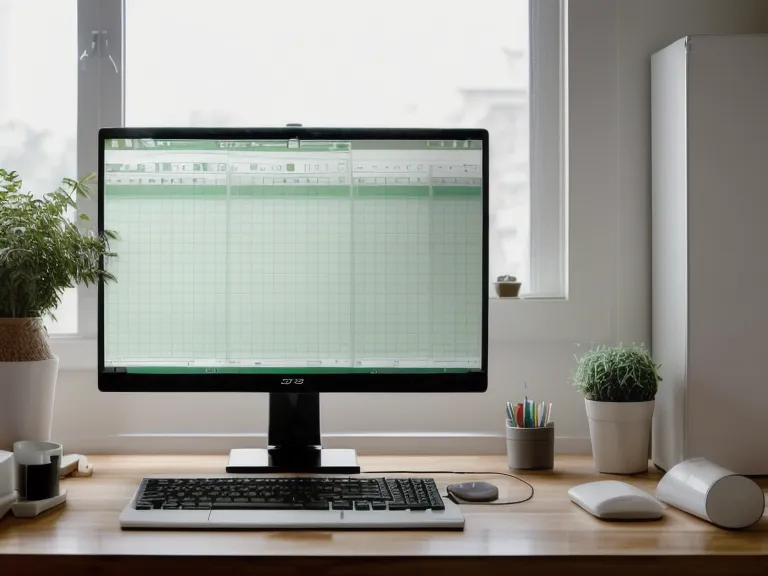
I still use my spreadsheet, of course. A retired accountant without a spreadsheet is like a car without a dashboard. But now, it’s a simple sheet. No complex macros, no 14 tabs. Just a record of whether I did the audio session and a subjective 1-10 score of how many times I forgot why I walked into the kitchen. If you’re curious about how I structured my early failures, you can check out my spreadsheet vs. memory tracking method.
Final Audit Notes
If you’re currently taking a handful of supplements every morning and feeling like you’re losing track of what’s actually working, my advice is to perform a temporary 'liquidation.' Strip it down to the basics. You might find that the 'stack' you built is actually just creating more fog.
For me, moving away from the pills and into the audio frequencies of The Brain Song was the reset my ledger needed. It’s a single signal in a world of noise. The price on the vendor's page can change, so I'd recommend checking it out there if you're looking for a way to simplify your own 'cognitive audit.' Just remember to keep your own records. The numbers don't lie, but they can certainly get messy if you don't keep a clean book. And please, talk to your doctor—especially if you start hearing humming in your teeth.
If you're still in the mood for a more traditional supplement but want to keep it to just one well-tracked item, you might look at my notes on using Neuro-Thrive for recall. But for now, I’m sticking to the one clear signal that doesn't require a pharmacy in my kitchen cabinet.