
Staring at a blank cell in my master spreadsheet late one night last month, I realized I couldn't remember if I’d actually taken my morning dose or if I had simply imagined the routine. For a man who spent thirty years ensuring every decimal point in a multi-million dollar audit was exactly where it belonged, this was a significant red flag. It was the cognitive equivalent of a balancing error that wouldn't clear, and it’s exactly why I’ve turned my retirement into a full-time investigation of my own grey matter.
Before we dive into the ledger, a bit of transparency: this site uses affiliate links. If you decide to buy something through these links, I earn a commission at no extra cost to you. I only recommend supplements and programs I have personally tested and tracked in my own spreadsheet—the one my wife says has more tabs than our tax returns ever did. I have zero medical training and I’m certainly not a doctor, so please talk to your own healthcare professional before you start messing with your chemistry.
The Audit: Why I Started Tracking
Early retirement wasn't exactly the plan. I stepped away from the firm partly because the mental sharpness I’d built my entire career on was starting to feel unreliable. The breaking point came when I forgot a long-term client's name mid-meeting—not just a slip of the tongue, but a total data wipe. It happened for the third time in a month, and I knew my internal hardware was failing its annual inspection. Since then, I’ve spent the last 14 months testing every natural brain support I could find online.
I started this journey late last August. I didn’t just want to feel better; I wanted to see the trend lines. As an accountant, I don't trust "subjective impressions." I trust data. I built a tracking system that monitors focus, recall, and mental fatigue on a scale of one to ten, logged every morning and evening. It’s a methodical, perhaps slightly obsessive habit, but when you’re used to reconciling accounts, you can’t just guess if your brain is working. You need to audit the claims against the actual results.
The 16,384 Column Limit and Other Failures
When I first set up my tracking sheet, I went a bit overboard. I’m a guy who knows that Excel has a maximum limit of 16,384 columns, and for a while, I think I was trying to use every single one of them. I was tracking everything: caffeine intake, sleep hours, humidity levels, and even the specific brand of green tea I was drinking. It was too much noise and not enough signal. I spent three hours building a complex macro to track my "mental clarity" only to realize I'd misspelled 'clarity' as 'clariity' in every single header. If that isn't a metaphor for cognitive decline, I don't know what is.
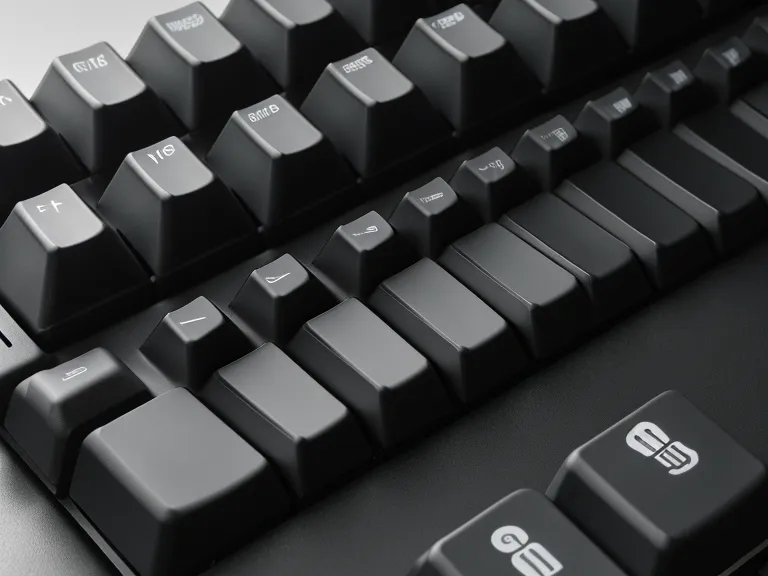
One morning last month, as I sat in the quiet of my home office, I felt the familiar, rhythmic hum of the mechanical keyboard under my fingers. It’s a comforting sound, a remnant of my years in the cubicle, but now the data I was entering was personal. I was tracking my first three months using traditional capsules like Neuro-Thrive and NeuroPrime. Most of these come in a standard supplement bottle count of 30 capsules, which makes the accounting easy—one bottle per month, one line item in the budget. You can read more about my early trials in My Tracking Spreadsheet vs. Brain Fog: A Retired Accountant's Four-Week Look at Neuro-Thrive.
What I noticed during those early months was a moderate ROI. My focus scores moved from a 4 to a 6, but the "fog"—that heavy, persistent feeling that I was thinking through a layer of wool—remained. I was looking for a breakthrough, something that would move the needle from a standard recovery to a genuine surplus of mental energy.
The Circadian Reconciliation: A Lesson for Shift Workers
During my testing, I stumbled upon a realization that most supplement manufacturers completely ignore. I call it the Circadian Reconciliation. A neighbor of mine, who works the night shift as a nurse, mentioned she felt no benefit from the same supplements I was taking. When we looked at her tracking (yes, I made a spreadsheet for her too), we saw the problem. Standard supplement tracking often fails for nighttime shift workers because their circadian rhythm disruption masks cognitive baseline changes.
If you’re taking a "morning" supplement at 6 PM before a shift, but your body is biologically primed for sleep, the supplement is fighting an uphill battle against your hormones. You need adjusted testing windows that align with your specific sleep-wake cycle, not the clock on the wall. For my neighbor, moving her tracking and her intake to a "relative morning" window changed everything. It’s a reminder that even the best inputs won't balance if the timing of the entry is wrong.

The Pivot to Audio: Challenging the Capsule Bias
By early spring, I was getting frustrated. My spreadsheet showed a plateau. I had a "capsule-only" bias; I figured if it didn't come in a bottle with a safety seal, it wasn't real science. But then I encountered something called The Brain Song. It’s an audio-based approach rather than a pill. At first, the accountant in me balked. How do you track the ROI of a sound wave?
The concept is based on brainwave entrainment, specifically targeting the Alpha brainwave frequency range of 8-13 Hz. This is the state where you’re relaxed but alert—the sweet spot for deep work. I decided to run a controlled trial, pitting my usual routine against this audio frequency method. The results were, frankly, an anomaly in my data set. About ten minutes into the first session, I felt a sudden, sharp coolness in my temples, like the feeling of a fever finally breaking. It wasn't the jittery spike you get from caffeine; it was a clearing of the books.
My wife laughed as she counted fourteen different supplement bottles lined up on the counter like a tiny, plastic skyline, but she stopped laughing when she realized I wasn't asking her the same question three times anymore. For the first time in 14 months, my recall scores hit an 8. If you're curious about how audio compares to traditional pills, I did a deep dive into NeuroPrime vs Brain Song for Better Name Recall and Memory.
Final Thoughts: Balancing the Brain’s Books
I’m still the numbers guy. I still log my scores every day at my desk, listening to the hum of my keyboard and the quiet of the house. But the spreadsheet now shows a steady trend upward. Testing brain supplements isn't about finding a magic pill; it’s about auditing your own life and being honest about what works. Sometimes the best solution isn't another bottle of 30 capsules like NeuroPrime or The Genius Song, but a change in how you approach the problem entirely.
If you’re feeling like your mental accounts are perpetually in the red, don't just guess. Start a log. Track your focus, your sleep, and your timing. And if you’re tired of the plastic skyline of bottles on your counter, you might want to look into the audio frequency approach. It’s the only thing that’s consistently cleared my fog without adding another line item to my supplement cabinet. You can check out the program that finally moved the needle for me here: The Brain Song. Just remember to keep your own records—the numbers never lie, even if our memories occasionally do.