
A capsule works on your bloodstream. A recording works on your ears. That's the entire line separating the two approaches sitting side by side in this brain health audit, and it turned out to matter more than any ingredient list ever did. Audio supplements don't ask you to swallow anything — they ask for fifteen minutes and a decent pair of headphones — which changes the cognitive ROI math in a way a spreadsheet actually likes. I wanted a real number on that return on investment before spending another cent, and that question is what pointed me toward The Brain Song.
Quick note before the comparison gets going: this page contains affiliate links, and if you buy through one I earn a commission at no extra cost to you. I only put products in front of you that have actually gone through the spreadsheet — no exceptions. None of this is medical advice; I'm a retired accountant, not a doctor, so check with your own physician before changing any routine, especially where cognitive health is concerned.
The Cognitive ROI Case for Audio Supplements
Most of my testing before this fit a predictable shape: buy a bottle, take a pill, wait and see if the fog clears. It's a lot like adding a fuel additive to a car — you're hoping the input changes the output, but you're never entirely sure which part did the work. The Brain Song breaks that shape completely. It's audio-based, so there's no capsule to swallow at all — less like buying an additive and more like retuning the engine itself. On price, it sits well below the premium capsule stacks I've tested, things like NeuroPrime, which occupies a much higher price tier for a comparable testing window. That gap alone made it worth a real side-by-side.
Long before I put a subscription program up against a pill bottle, I tried the cheapest possible fix: a daily crossword out of the Dallas Morning News, the kind every retirement-brain article swears by. Months of it barely moved a single column in my log. Knowing the six-letter word for an obscure opera composer doesn't transfer to remembering a client's name in a meeting, and my spreadsheet made that painfully obvious before long. That failure is part of why I stopped trusting hobby fixes and started trusting the log instead.
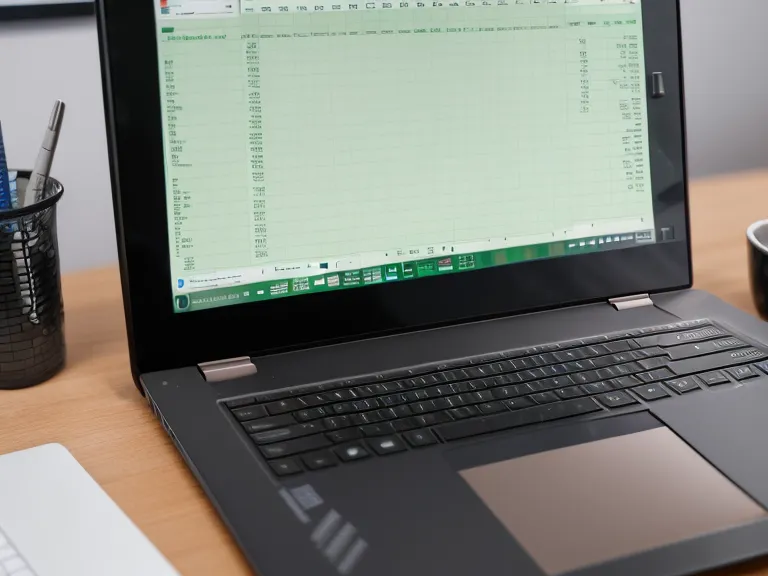
Most Sessions Happened on the Craig Ranch Park Trails
Fifteen minutes a day, every day, for eight weeks, was the whole assignment — fifty-six sessions, right around eight hundred and forty minutes of total exposure, no skipped entries, no excuses, the same discipline I used to apply to closing the books every quarter. Most of those sessions happened on the trails at Craig Ranch Park in McKinney, headphones in, phone in my pocket instead of in my hand. If you've read my 90-day data audit on afternoon fog, you already know I don't take these logs lightly, and this one added a wrinkle none of my capsule tests ever had: nothing to swallow, nowhere to store a bottle, nothing physical reminding me I'd "done the thing" for the day. Testing something like Neuro-Thrive always came with that physical reminder — a pill in hand, a bottle on the counter. With The Brain Song, the input was purely auditory, which took some getting used to.
A reader named Dorinda Szymanski, who keeps her own log, emailed partway through to ask whether I'd controlled for the walking itself — whether the trail, not the track playing in my ears, was doing some of the lifting. It's a fair question, and one my spreadsheet structure isn't built to fully answer on its own, since that structure is designed to catch a straight audio-versus-capsule difference, not a walking-versus-sitting one. I didn't have a clean way to separate the two variables inside this particular window, and I told her exactly that.
The clearest proof showed up somewhere I wasn't measuring at all: at a restaurant during the trial, I looked at the menu once, ordered, and never flipped back to check it again, something that would have taken two passes a year earlier. That's not proof of anything scientific, and none of this rules out a placebo-baseline effect, the boost you'd expect from believing any new routine is helping regardless of what's actually in it. I don't have a clean way to strip that out of a self-run test, and neither does anyone else running one at home.
Two Ledgers Side by Side: Brain Song Against the Capsule Stack
Set next to each other, The Brain Song performed remarkably well against everything else in my capsule stack, and it sits closest on my tracking sheet to The Genius Song, which has a similar price tier, similar frequency-based premise, and a high conversion rate among the readers in my group who tried it after reading about the first one. NeuroPrime sits in a completely different column: a traditional capsule, priced at the premium end, built for someone who wants something tangible to hold and swallow rather than a track to press play on. I've stopped taking any single label's claims at face value a long time ago — what a bottle promises and what the log actually shows are two different columns, which is exactly the label-versus-result gap that got me tracking in the first place. For a guy who has already run more of these comparisons than he'd like to admit, the audio program's price tag cleared what I think of as the hurdle rate far more easily than NeuroPrime's did, and I've laid out that exact math before in my analysis of cost per cognitive gain.
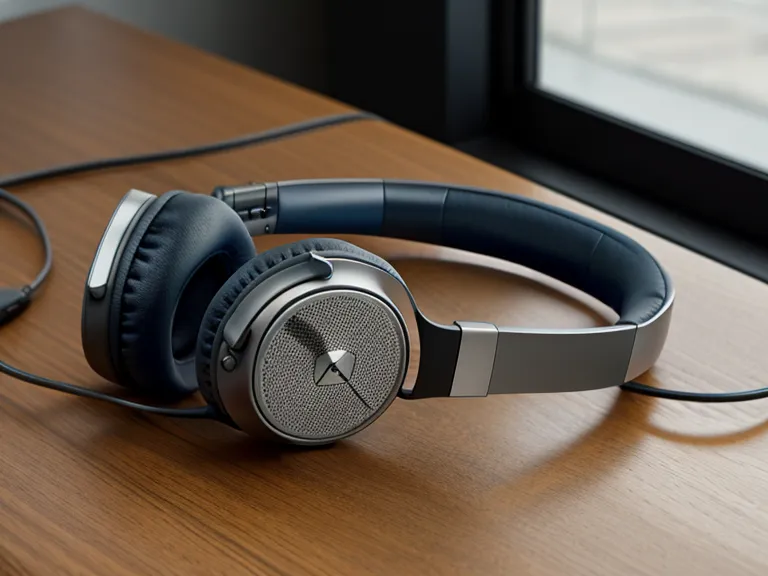
Where the Two Approaches Actually Diverge
I like to think of my brain as a portfolio, and you don't put all your capital into one volatile position. During this window, I stopped every other brain-specific supplement so the data wouldn't get polluted by outside variables, and the results held steady the whole way through. Unlike a caffeine spike that leaves you running a deficit by mid-afternoon, the audio approach behaved more like a slow accrual of interest — it never peaked as high, but it never crashed either. One thing I logged almost as an afterthought, in the notes column, was that sleep quality seemed to settle down too, and as any decent audit will tell you, secondary effects are sometimes the ones that matter most.
My old colleague Neil Trevisan, semi-retired now himself, is usually the first person I call when I want someone to try to poke holes in a test design, and even he couldn't find an obvious flaw in running the two approaches back to back rather than side by side in the same eight weeks. He did point out, fairly, that back-to-back testing has its own bias. Whatever comes second benefits from everything you've already learned running the first. That's a real limitation of this particular comparison, and I'm not going to pretend otherwise.
Weighing the Pros and Cons Side by Side
Every asset in this test came with a liability attached, and I try to mark it down honestly when the data doesn't back up the claim. On the plus side, The Brain Song has a low barrier to entry compared with the premium capsule stacks, which matters if you're not ready to commit real money before you know whether an approach even works for you. The passive nature of it is a real plus too — you're not adding another pill to a morning organizer that, if you're anything like me, already looks like a small pharmacy shelf. The recall metric in my log — which tracks specifically how often I go searching for a word mid-sentence, a narrower thing than overall "focus" — showed a real, sustained improvement, and focus duration per session ran noticeably longer by the back half of the test than it had at the start, without the energy dip a caffeine-driven boost usually brings.

On the liability side, the audio approach demands discipline in a way a pill doesn't — you can't swallow it and forget about it, you have to actually sit or walk through the fifteen minutes. Skeptics who need something physical to hold onto may find frequency-based programs feel like softer data than a capsule with a label and a dosage. The vendor is also newer to the space than some of the capsule brands I've tracked for longer, so the long-term track record is still being built, which is worth knowing going in. And on the one day I missed — visiting family took over the schedule — it felt like I had to re-prime the whole routine the next morning, more than a missed pill ever did.
So Which One Clears the Hurdle Rate?
Here's the actual trade-off, reduced to the two columns that matter: The Brain Song isn't some kind of miracle fix — nothing on my shelf has earned that label — but for the price, the numbers in my spreadsheet are hard to argue with, especially if the cost-to-value math matters more to you than the format feeling familiar. Choose the capsule route instead, and specifically 6-month analysis of NeuroPrime, if you want something conventional, something you can physically hand your doctor and ask about, and you don't mind paying a premium for that traditional trust. And if you'd rather stay in the audio lane but want a second opinion on the same premise, The Genius Song is the other program worth running through your own log.
Track your own numbers no matter which lane you pick — that's the only way to know if any of this is actually working for your brain instead of just working in theory. My wife still thinks a grown man color-coding his own recall speed is somewhere between admirable and slightly unhinged, and most days I'd agree with her. Audit your inputs, log your outputs, and keep the spreadsheet running long after the free trial period ends. It makes the results a lot harder to argue with, mine included.