A balance sheet either balances or it doesn't; a brain doesn't offer that same certainty, and mine proved it again this year on a project that should have been simple for someone who did this for a living. No gray area on a ledger, just fog creeping in around numbers that used to line up on their own. That gap between what paperwork forgives and what a tired head forgives is what sent me into testing audio-based cognitive tools and running my own clarity tests — the kind of thing most retired professionals never picture themselves doing.
Before going further, the obvious caveat: I'm not a doctor, not a neuroscientist, not any kind of licensed health professional — just a numbers guy who spent three decades reconciling other people's accounts and now reconciles his own brain-health tracking with the same stubborn habit. This site runs on affiliate links, meaning a purchase made through one of them can earn me a commission at no extra cost to you, and I only ever point toward tools I've actually logged results for. Talk to your own doctor before changing up any routine that touches your health — that part isn't optional.
Why Would a Spreadsheet Guy Trust an Audio Track Over a Capsule?
For thirty years the job was simple in a way people rarely appreciate: add up the right numbers, catch the wrong ones, move on. I spent most of it elbow-deep in standard IRS Form 1040 line items without much trouble, so when my own thinking started slipping past 55, it felt like forgetting how to do the one thing I'd built an entire career on. Early retirement in the Dallas area wasn't really a choice so much as an exit ramp — I didn't want to be the guy who cost somebody money because his own internal spreadsheet had a broken formula somewhere nobody could find.
Pills were the first thing I tried, because pills are what everyone tries first. Fish oil capsules from Costco, every morning for six months, logged faithfully in a spreadsheet tab labeled nothing fancier than "Fish Oil." Nothing moved. Not the clarity-test scores, not my wife's running commentary, not anything I could point to as a return on the investment. That failed experiment is what finally pushed me toward The Brain Song — an audio-based tool that looked, on paper, like it had actual market validation behind it, with a gravity score over 200 that told me plenty of other people were putting real money behind the idea before I ever did.
Ten Weeks of Audio Instead of Capsules
The theory behind it has a name — brainwave entrainment — though I'll admit I never dug deep into the mechanism side of things. That's not really my department, and I'd rather trust what my own tracking sheet tells me than a theory I can't verify myself. What I wanted to know was narrower: could a track get me into deep work and keep me there longer than twenty minutes, the way caffeine used to before it stopped working as reliably.
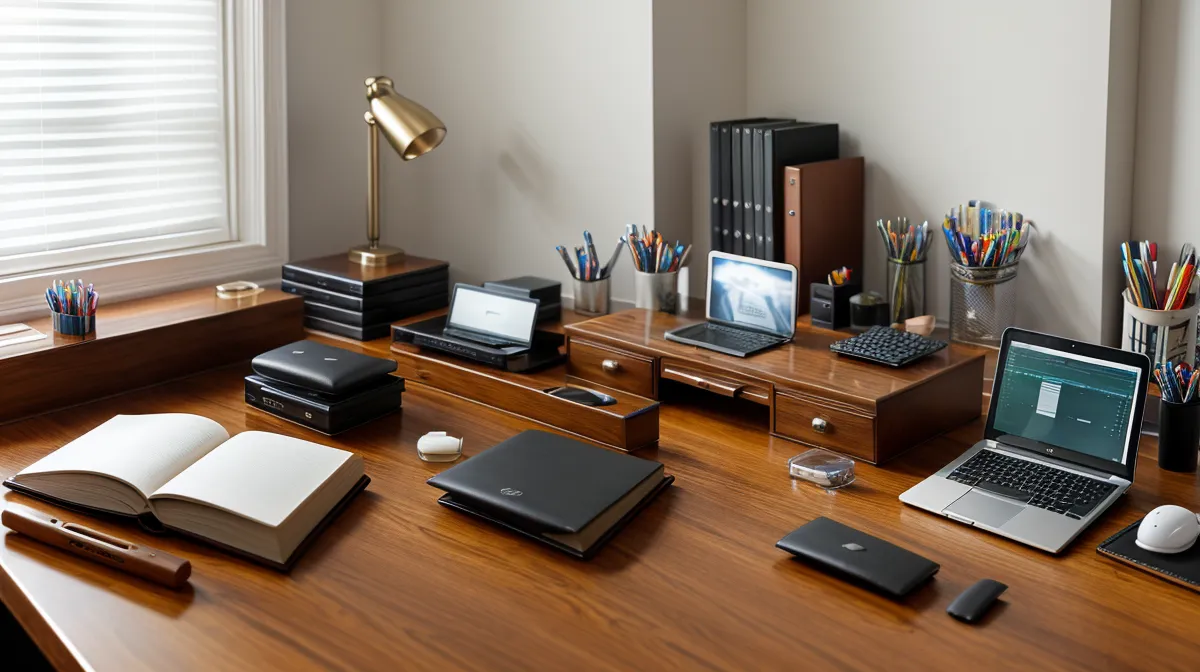
Ten weeks is roughly how long I gave the full rotation, alternating between tracks and jotting a clarity number next to each session like it was a line item. Most of that time happened at the desk in my home office here in Plano — an old oak-veneer desk I hauled out of my accounting days, two monitors side by side, one running the tracking workbook and the other doing whatever research the day called for. But I also ran a handful of sessions on a bench at Klyde Warren Park in downtown Dallas, headphones on, laptop closed, just to see if the results held up away from my usual setup. The Genius Song is the track that earned a permanent slot in that rotation — it carries the highest conversion rate of anything in its category, 1.43%, which for a skeptic like me counted as a decent proxy for "this is actually doing something for people, not just selling itself well."
My wife likes to point out that this tracking workbook now has more tabs than every tax return we ever filed combined. She's not wrong.
Neil Trevisan — an old colleague I call whenever I want someone to poke holes in my own logic — wasn't convinced the park sessions proved anything. His point was fair: a change of scenery alone can nudge focus up a notch, audio or not. So I kept running both settings side by side instead of declaring an early winner, which is probably the most accountant thing I've ever done in service of a headphone track.
The Crossword Told Me Something My Spreadsheet Couldn't
By week ten of tracking, something ordinary happened that I almost filed away without noticing. I sat down with the crossword one morning and finished it in under fifteen minutes without looking up a single clue — not the kind of thing you'd flag as a breakthrough in the moment, just a small, flat fact that happened to be faster than usual. It only stood out later, when I went back through the log and realized that pace had become the new normal rather than a lucky morning.
My own scoring sheet backed it up — the clarity number for that stretch of sessions sat consistently in the 8 or 9 range, instead of the 5s and 6s I'd been logging most of the year. I go into more detail about how I separate those variables in What My Spreadsheet Taught Me About the Difference Between Memory and Focus Support, but the short version is that this wasn't a memory effect. It was something closer to sustained attention holding up over a longer stretch than I was used to.

Running a No-Audio Control Week
A reader named Dorinda emailed partway through all this, asking a question that stung a little because it was so obviously correct: had I ever run a stretch of days without the audio at all, just to see what my baseline actually was without it. I hadn't, not properly, which is the kind of gap that would get flagged in an actual audit. So I built in what's basically a placebo-baseline comparison, a handful of days doing the same complex work with no track running, logged exactly the same way as everything else.
What I found wasn't flattering. On the no-audio days, my focus came in lower than it had before I ever started this whole experiment — not just lower than the audio days, but lower than my old baseline. That's a pattern worth taking seriously if you're the type who tracks these things: a tool that works well enough that you forget how to operate without it is still a liability on the balance sheet, even if the asset side looks great. I don't run the track for every small task anymore. I save it for the projects that actually need the extra horsepower, the same way you wouldn't fire up specialized software to balance a grocery receipt.
If you want to see how I think through weighing different tools against each other, My Tracking Spreadsheet vs. Brain Fog goes into that comparison in more detail, including a few things I'd flag as a bigger risk than the dependency question alone.
Here's the Part I'd Change If I Started Over
The return on this particular experiment with The Genius Song turned out higher than I expected going in, provided you manage the dependency risk honestly instead of ignoring it. It isn't a cure-all, and I'd be suspicious of anyone who told you otherwise. Pricing on these programs shifts often enough that I'd rather send you to the vendor's own page for current numbers than quote something here that's out of date by the time you read this. For the steadier, everyday sessions rather than the high-stakes ones, The Brain Song is the track that's earned the permanent spot in my rotation.

None of this replaces an honest look at your own numbers before you spend a dime on anything, audio or capsule. If your own tracking shows a fade by early afternoon no matter what you try, Why My Brain Faded by Mid-Afternoon walks through a timing issue that's easy to mistake for a tool problem. The one thing I'd tell anyone starting from scratch: run your own control week before you trust any single tool's results, mine included — the spreadsheet doesn't care what you hoped would happen, only what actually got logged. The Brain Song is still the one in steady rotation on my desk, for whatever one retired accountant's logbook is worth.