
Two hundred twenty-five rows: that's what's currently sitting in the spreadsheet I use to track brain fog and supplement tracking, and not one of them came out of a lab. Thirty years of reconciling other people's books left me with exactly one instinct for a problem like this: stop guessing and start logging. Cognitive health, once you actually track it, behaves a lot like a general ledger — the shortfall doesn't announce itself, you find it by comparing columns until something doesn't add up, and that comparison is what eventually proved my own brain wasn't the failing asset I'd assumed it was.
Before the numbers, the obligatory disclosure: this site runs on affiliate links, so if you click through and buy one of the programs I mention, I earn a commission at no extra cost to you. I only put a product in the tracking sheet if I've actually run it myself — no different from how I wouldn't sign off on a client's books without checking the receipts first. I'm not a doctor, a neuroscientist, or anything else with a license, so treat all of this as one guy's spreadsheet, not medical advice.
What Counts as a Data Point in a Supplement Tracking Sheet
Every entry in that sheet answers the same four questions: a morning sharpness score from one to ten, an afternoon score taken at the same time of day, a short word-recall check, and whatever that week's testing cost against everything else in the budget. A ten on the sharpness scale means I can still run interest calculations in my head without reaching for a calculator; a one means I've lost my own train of thought mid-sentence. Word-recall gets its own column and its own quirks — a different signal than general fog, worth tracking separately rather than folding into one fuzzy number.
My neighbor Vernon Ashby runs an entirely separate version of this same experiment, and his numbers don't always move the same way mine do on an identical product — a useful reminder that any one spreadsheet, mine included, is still a sample size of one.
Pam Godfrey, a neighbor down the street, ran into me outside the Central Market on Lovers Lane recently and asked, in that same no-nonsense way she asks everything, whether I'd corrected for practice effect before calling any of this real improvement — exactly the question I should have been asking myself from day one.

Testing the Premium Route First
My first move was to assume the priciest option would work the hardest — the same bias I used to see in vendors pitching enterprise software over something simpler that did the same job. I ran a full cycle of NeuroPrime at a premium price point, expecting a jump that would justify the invoice, and got a modest lift on the sharpness scale instead — noticeable, not remarkable. Where the premium capsule actually earned its keep was overnight, which I broke down separately in Sleep Quality and NeuroPrime: Analyzing the Rest-to-Focus Ratio.
A cheaper capsule option, Neuro-Thrive, landed in a similar range for daytime fog — solid, unremarkable, the kind of result that fills a column without changing your mind. Whether either one cleared a real return-on-investment bar is its own spreadsheet question, one I keep entirely separate from the fog tracking itself.
Why I Pivoted to an Audio-Based Test
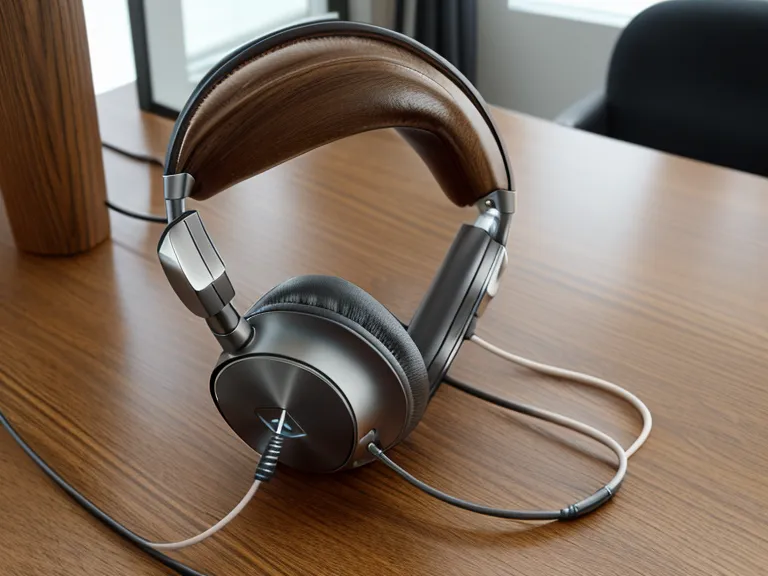
Somewhere in the middle of testing capsule formulas, I started running something that had nothing to do with swallowing anything: an audio-based program built around resonance and frequency, which isn't as strange a mechanism to test as it sounds when thought about like fiscal cycles instead of new-age noise. I put The Brain Song through the identical four-question method: same time of day, same conditions, just a different input replacing the capsule. Comparing sound against a pill isn't a fair fight on paper, which is exactly the point — different category, different failure modes, a real shot at moving a number the capsules hadn't touched.
The Quarterly Reconciliation, Step by Step
Every few months I run what I privately call a reconciliation — pulling the entire sheet, not just one supplement's slice of it, to check whether the trend since the last full review actually holds up under a wider lens. The exact structure behind that sheet, from the tabs to the baseline formulas to how a new supplement gets separated from an established one, is a longer explanation than fits here, saved for its own post entirely. What holds up consistently under that wider view is a real split between morning fog and afternoon fog: they don't move together, so afternoon fog gets tracked as its own category rather than a footnote to the morning number. That full-sheet review is also where I cross-reference against Best Natural Brain Supplements for Concentration: An Accountant's Data, since concentration and general fog clearly overlap without tracking identically.
Does the Cheaper Audio Program Actually Win?
Any brand-new addition to the sheet gets an early lift that's mostly expectation rather than the ingredient or the track itself, so nothing gets credited as real improvement until the numbers hold past that initial bump against an actual baseline. Once that settling happened, the comparison held up: The Brain Song kept producing a bigger, steadier movement on the sharpness scale than the capsule route ever had, at a noticeably lower cost per point of improvement. A similar program, The Genius Song, ran alongside it with a solid result too, though the specific frequencies in the first program tracked slightly better against my particular pattern of fog. What a label promises rarely matches what the tracking sheet ends up saying, which is most of why I stopped taking marketing copy at face value.
Brain Fog Is a Retrieval Problem, Not a Fuel Problem
My working theory, built from the sheet rather than any biology textbook, is that brain fog after fifty behaves less like an energy shortage and more like a filing problem — the information is still in there, but retrieval gets slower and less reliable. Most supplements are built to push more energy into the system, and forcing more energy at a filing problem doesn't fix the filing; it just adds noise to an already backed-up in-tray.
What actually moved my numbers was a smoother retrieval path, not a jolt of energy — the "tip of the tongue" stretch that used to eat up whole conversations mostly stopped happening. I wrote about the earliest version of that shift in My First 30 Days Testing Brain Supplements, back when I was still guessing at which column mattered most. A neighbor once swore by B-complex vitamins for exactly this kind of fog; I ran a full cycle of them and that line never moved, so it sits flat in the sheet as one more thing that didn't work for me specifically.
The clearest proof showed up outside the sheet entirely — mid-sentence with my son-in-law, a word I'd been chasing for three straight days just walked back in on its own, no searching, no pause.

The Final Reconciliation
None of this replaces an actual doctor, and I said as much to mine before trusting a single row in that sheet — ruling out anything mechanical is step one, and no spreadsheet does that part for you. Past that point, the sheet is what settles arguments in this house: solid capsule formulas can nudge a number, but the audio-based route produced the steadiest, cheapest-per-point movement I've logged since I started this whole retired life experiment in tracking my own brain. If you want the one currently sitting at the top of that sheet, it's The Brain Song — not because it's the loudest pitch out there, just because it's the one still showing a positive number after everything else got reconciled against it. My wife still gives the headphones a look most mornings, but she stopped arguing once she noticed I remember the grocery list without a note card. For a guy whose old job was built entirely on other people's numbers, that might be the one metric that actually matters.